Flooded deep cycle batteries can lose some of their water through evaporation as the battery heats up during the recharge process.
This is part of a flooded battery’s normal operation, but it means that the water level inside each battery cell must be checked on a regular basis and topped up as necessary*.
Always use distilled water and never add water past the fill line inside each battery cell.
ALWAYS add water to a battery after it has fully recharged and cooled down. NEVER add water to a battery before recharging it.
The water level will rise as the battery is being charged, so adding water while the battery is discharged could cause it to overflow and lose some of its acid during the recharge process.
This will reduce the power-generating capability of the battery.
IMPORTANT: Never check the water levels of a battery before the battery has fully cooled. Recharging a battery causes it to heat up. Removing a vent cap to access the water reservoir could therefore cause the battery to spew acid and cause serious injury.
NEVER CHARGE A FROZEN BATTERY. Doing so may cause the battery to explode. Always allow a battery to come up to room temperature before recharging it.
*Important note: When handling batteries be sure to wear protective gloves and eyewear. Battery electrolyte is highly acidic and can burn through skin and clothing. If the electrolyte should contact skin or eyes, flush extensively with large quantities of cool water and seek medical attention as soon as possible.
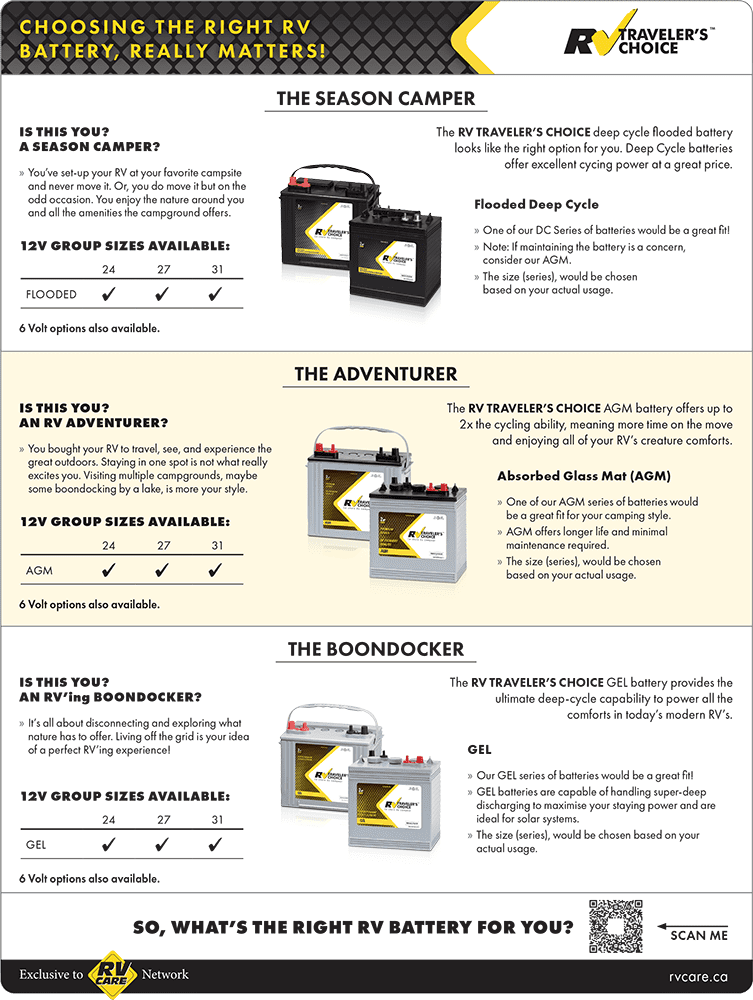
Note that AGM and gel batteries are fully sealed and maintenance-free, which means they never need to be watered. These batteries are therefore a great alternative to regular flooded batteries for individuals who are not comfortable with working around batteries.